
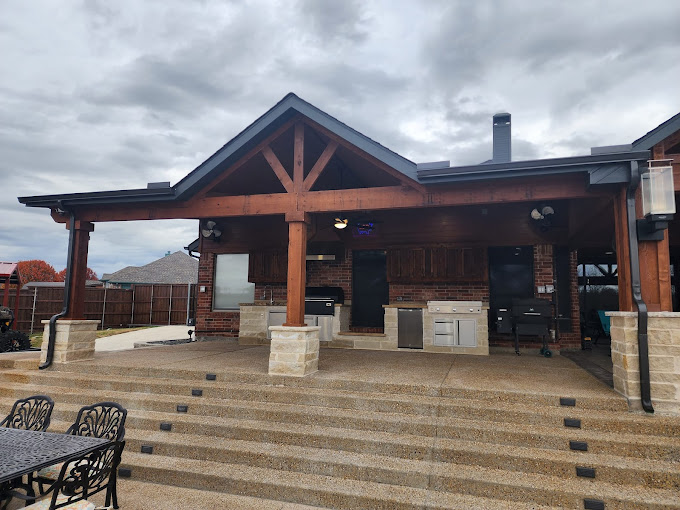
By the AY Development team — serving Dallas-Fort Worth and the Austin, San Antonio & Houston area.
Last summer, a homeowner in the Dallas-Fort Worth area noticed their patio looked “fine” from the street—until you stepped closer. The pavers were uneven in spots, the landscaping beds were pulling away from the patio edge, and after a few heavy rainstorms the water started running toward the house instead of away from it. They weren’t sure whether to tackle the patio builder work first, or the landscaping pairings—so they delayed the project and the small issues slowly turned into bigger ones.
This guide explains how patio builder landscaping pairings work together for effortless curb appeal—so your outdoor kitchen, patio, and planting choices look intentional and also function as a system (drainage, spacing, and long-term maintenance). You’ll also learn the common mistakes that create “pretty from far away, messy up close” results.
Quick Answer
If you want curb appeal that holds up, design your patio layout and landscaping pairings together. Start with water flow and edge details (where water goes, how beds border the patio), then pick materials and plants that match your home’s style and your maintenance comfort. In Dallas-Fort Worth and the surrounding areas, the “best-looking” patio plan is the one that also manages heat, rain, and seasonal growth—so your outdoor space stays clean, straight, and usable year-round.
What to Check First
Before choosing pavers, stone, or plants, walk your property with a simple purpose: identify what’s already happening—especially with water and sight lines.
- Where does rainwater go? After a storm, watch where runoff travels. If you see water pooling near doors, foundations, or along patio edges, your landscaping pairings must support drainage—not fight it.
- What do you see from the street? Choose “anchor” elements (a focal plant, a clean border line, a matching material) that create a tidy first impression.
- What’s the current maintenance reality? If you don’t want frequent trimming, you’ll need different plant spacing and growth habits than a homeowner who enjoys yard work.
- How will you use the space? Traffic patterns matter. A patio edge that looks great but forces you to step through a planting bed will become a problem.
Local tip: In the DFW area, heavy downpours can quickly reveal poor edge grading. When patio builder and landscaping are planned together, you can reduce runoff issues that otherwise show up as patio settling, muddy beds, or plant loss.
Main Things Customers Should Understand
Patio curb appeal isn’t just about choosing pretty materials. The best results come from pairing patio features with landscaping choices that work together—visually and functionally.
1) Patio materials should “frame” the landscape—not compete with it
When homeowners match patio stone/pavers to the surrounding hardscape (entry paths, driveway edges, retaining lines), your yard reads as intentional. A common win is using one primary hardscape tone, then adding a second accent (like a planter coping color or border edging) that mirrors details elsewhere on the home.
2) Planting placement is as important as plant selection
Even if you choose the right plants for your Texas conditions, spacing and placement determine whether the patio looks clean after one or two seasons. For example:
- Keep beds from “overlapping” the patio edge in a way that forces soil transfer onto pavers.
- Use edging and consistent bed lines so the patio stays crisp instead of getting fuzzy around the edges.
- Choose growth habits that won’t block sight lines or overwhelm lighting and walkways.
3) Drainage details create the difference between “nice” and “durable”
In real projects, we often see the same pattern: the patio looks good at install, but later water undermines soil near edges and plants start failing or the patio surface shifts. Landscaping pairings should support drainage by respecting how the patio is graded and where runoff should be directed.
4) Lighting and “night curb appeal” should be part of the pairing
If your patio is visible from the street or from a front window, lighting placement can make everything feel designed. Well-paired lighting highlights planting structure and hardscape lines without washing out the patio surface.
| Pairing decision | What it means in practice | Best for |
|---|---|---|
| Clean edging + controlled bed lines | Defines where landscaping ends and hardscape begins, reducing soil transfer and keeping the patio visually “sharp.” | Homes where you want a modern, tidy curb appeal look |
| Focal planting near viewing angles | Uses one or two “anchor” plants where people naturally look (entry/side yard/patio approach) so the space reads cohesive. | Front-facing patios or visible outdoor kitchens |
| Plant spacing that matches traffic patterns | Prevents beds from becoming obstacles and reduces damage from stepping, furniture placement, or seasonal cleanup. | Family-heavy homes and frequent outdoor entertaining |
| Drainage-supporting layout | Aligns grading, edge details, and planting placement so runoff goes where it should. | Properties that see pooling after storms or have soft spots |
Planning a patio + landscaping pairing?
AY Development helps homeowners coordinate patio builder work with landscaping pairings for a cleaner look and better long-term performance in Dallas-Fort Worth and the Austin, San Antonio & Houston area.
Why This Matters in Dallas-Fort Worth
Dallas-Fort Worth homes often have a mix of older lot grading, established landscaping, and newer patio additions. Over time, that creates a patchwork: uneven edges, plants that struggle in the wrong micro-zones, and runoff paths that don’t match the patio layout. Pairing the patio builder scope with landscaping planning helps you avoid those “it looked great when installed” outcomes.
We also see seasonal behavior affect curb appeal:
- Heavy rain events: reveal grading issues quickly.
- Summer heat: can stress plants placed too close to reflective surfaces or without adequate soil preparation.
- Growth cycles: make spacing and pruning expectations real—especially for homeowners who want low-maintenance results.
If you’re adding or upgrading outdoor living, it also helps to plan the patio and landscaping alongside related projects. For example, if you’re considering an outdoor kitchen, the pathway from the kitchen to the seating area should feel intentional—not like an afterthought. (If you want to explore options, you can also review outdoor kitchen building.)
Common Mistakes to Avoid
These are the issues we most often see when patio builder work and landscaping are planned separately—or when homeowners choose the look first and deal with function later.
- Choosing plants without checking bed-to-patio spacing: Plants that are too close can force constant cleanup and soil transfer onto pavers.
- Ignoring drainage at the patio edge: If runoff isn’t planned, you can end up with shifting surfaces, muddy beds, and dead plants after storms.
- Picking hardscape materials that don’t match the home’s lines: Even high-quality stone can look “off” if the color and texture don’t harmonize with entry paths, driveways, or existing walls.
- Forgetting lighting and nighttime visibility: A patio can look great in daylight but feel harsh or unfinished at night if lighting and planting heights aren’t paired thoughtfully.
Important reminder: If your patio already has uneven spots or water collects near the edges, don’t assume the landscaping is the fix. Start with the patio’s grading and edge details—then build the landscaping pairings around that reality.
Customer Checklist
Use this quick checklist to keep your patio builder landscaping pairing focused and easy to review with your contractor.
- Water flow confirmed: you know where storm runoff goes and where you want it to go.
- Edge details planned: bed lines, edging, and transitions are designed to keep pavers and soil separate.
- Materials coordinated: patio tone and texture match nearby hardscape (entry/drive/walkway).
- Plants paired to function: placement considers traffic, cleanup, and growth over time.
- Maintenance expectations set: you chose plants that fit your pruning and watering comfort level.
Pro tip: If you’re also planning changes indoors, it helps to keep the outdoor style consistent with your interior updates. For instance, a custom kitchen remodel often leads homeowners to update adjacent spaces and finishes—so your exterior materials and lighting should feel like the same design language. You can explore kitchen remodeling ideas if you’re coordinating an overall transformation.
Frequently Asked Questions
How do I know if I should plan the patio first or the landscaping first?
In most cases, the patio should be planned first because grading and edge details control how water moves. If you add landscaping without confirming patio slope and runoff paths, you may end up with soil washing onto pavers or plants that sit in wet zones. Once the patio layout and transitions are confirmed, landscaping pairings become much easier to place correctly for both curb appeal and long-term performance.
What’s the biggest factor for curb appeal when pairing patios and plants?
Crisp transitions—clean bed lines, consistent edging, and plants positioned with enough spacing—make the biggest difference. Color and plant choice matter, but if the patio edge looks messy after rainfall or soil transfers onto the surface, curb appeal drops quickly. Pairing hardscape materials with a simple, intentional planting layout usually delivers the best “it looks finished” result.
Can I fix drainage problems with landscaping alone?
Sometimes, but not reliably. If water is pooling due to patio grading, it’s usually the patio’s slope and edge construction that needs attention. Landscaping can support drainage when it’s designed to work with the patio plan, but it can’t consistently overcome a poorly graded hardscape surface. A coordinated approach is the safest path to avoid repeating the same issues.
What should I consider if I want a luxury outdoor kitchen look?
Luxury outdoor kitchen curb appeal comes from cohesive lines: the patio layout, seating clearance, and landscaping that frames the space without blocking views or pathways. If you’re adding an outdoor kitchen, plan how people will move from the kitchen to dining and around planters. For service-focused guidance, you can review patio builder Dallas options to understand how the patio foundation and layout support outdoor living.
How long does a patio-and-landscaping pairing project take?
Timelines vary based on the scope (new patio vs. rework, material selection, and how much landscaping is being installed or upgraded). Your project plan should account for site prep, hardscape construction, and landscaping installation—plus any adjustments after grading is confirmed. The best approach is to discuss your goals and site conditions so the schedule reflects real construction sequencing.
Ready to Get Help From AY Development?
If your patio area feels unfinished up close—or you want a curb appeal upgrade that stays clean after storms—AY Development can help you plan patio builder landscaping pairings that look intentional and function as a system. Serving Dallas-Fort Worth and the Austin, San Antonio & Houston area, we focus on practical design decisions: drainage-aware layouts, clean transitions, and plant placement that matches how you actually use your space.
Get a coordinated plan for your outdoor curb appeal
Contact AY Development to talk through your patio goals, landscaping pairings, and the site details that affect long-term results in Dallas-Fort Worth and surrounding areas.
Call AY Development: (469) 345-3009About AY Development
AY Development helps Dallas-Fort Worth homeowners and clients across the Austin, San Antonio & Houston area with remodeling services and outdoor-focused upgrades designed around practical guidance and coordinated build planning. The team focuses on helping customers choose the right next step—whether that’s patio builder support for outdoor living, remodeling coordination, or related home improvements—so the final result looks great and performs well over time.
Related services you may be planning alongside your patio: